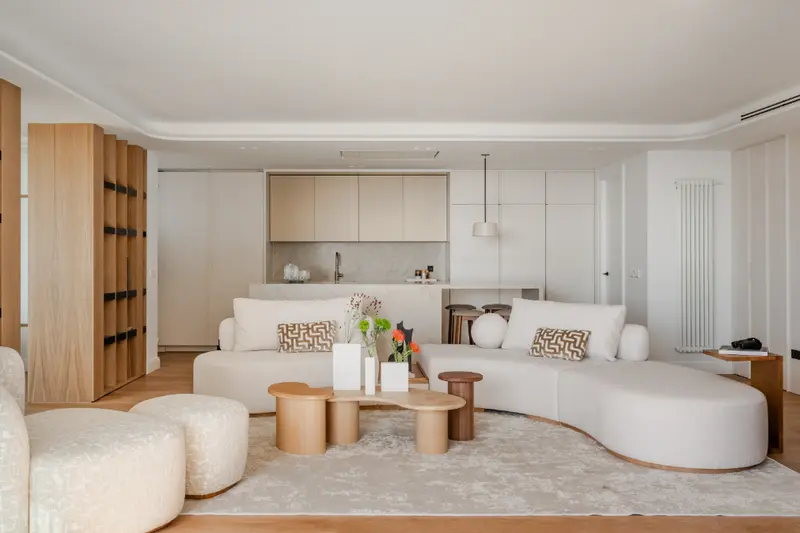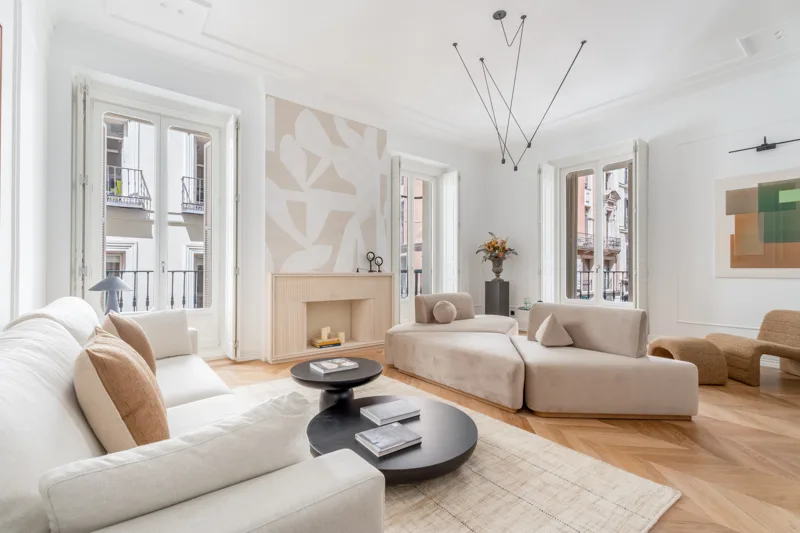
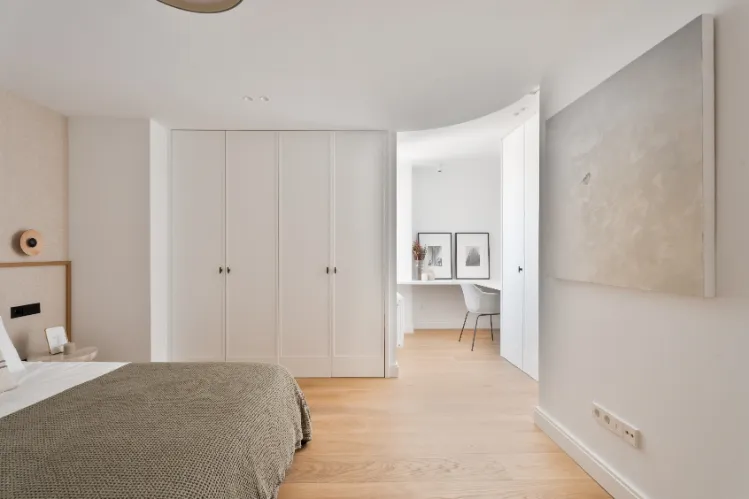
There is a moment in every project when the works end and something else begins: the first armchair comes in, the first picture goes up, and the space — perfect but mute — starts to speak. That final layer is what defines us most, and it explains why our homes look nothing like a show flat.
Against the show flat
The sector's standard interior design furnishes for no one: neutral pieces, industrial series, beige walls. We do the opposite: we furnish as if we were going to live there. Original 1950s-70s chairs and sideboards restored piece by piece, lamps with decades of history, art chosen for each wall, real books on the shelves. Objects that have already lived — exactly what a 1900s building asks for, and what no industrial series can give.
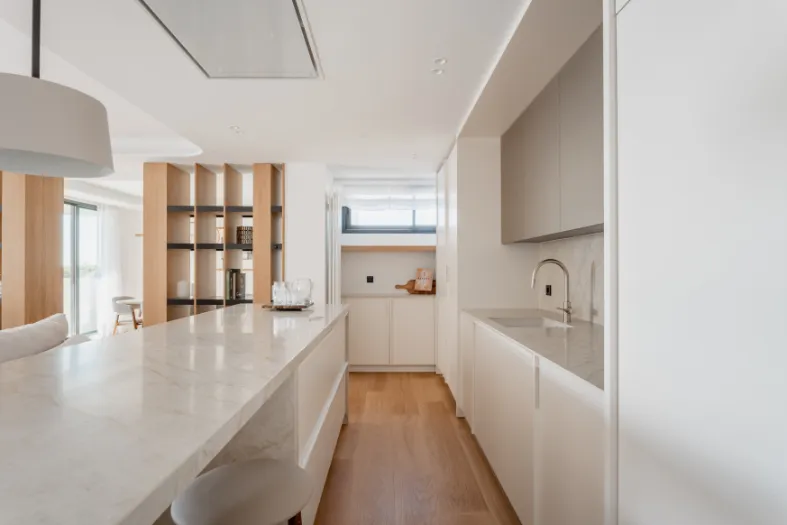
The value of the finished product (in the numbers, too)
This philosophy translates into economics. The market pays for the fully resolved product: a renovated home in Madrid sells for up to 30% more than its unrenovated equivalent according to idealista/news, and the logic extends to the next step up — the home with identity, ready to live in. It is the same principle behind branded residences selling at an average premium of 33% over comparable homes, according to Savills: buyers in the upper segment do not pay for square metres, they pay for resolution — for someone with judgement having already made every decision.
How a soul gets built
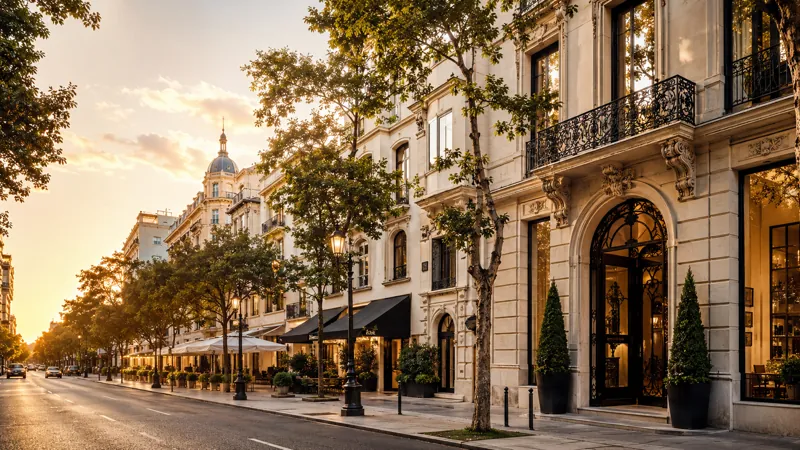
The process starts before the works end: each home receives its own narrative — who would live here, what they collect, what they read — and the pieces are sourced against it in antique dealers, auctions and restoration workshops. Nothing is bought from a catalogue twice. That is why, when we show a home, we are not showing a property for sale: we are showing a specific way of living in Madrid, with the door open. The full concept is in what is a boutique home, and it is understood even better by visiting one.