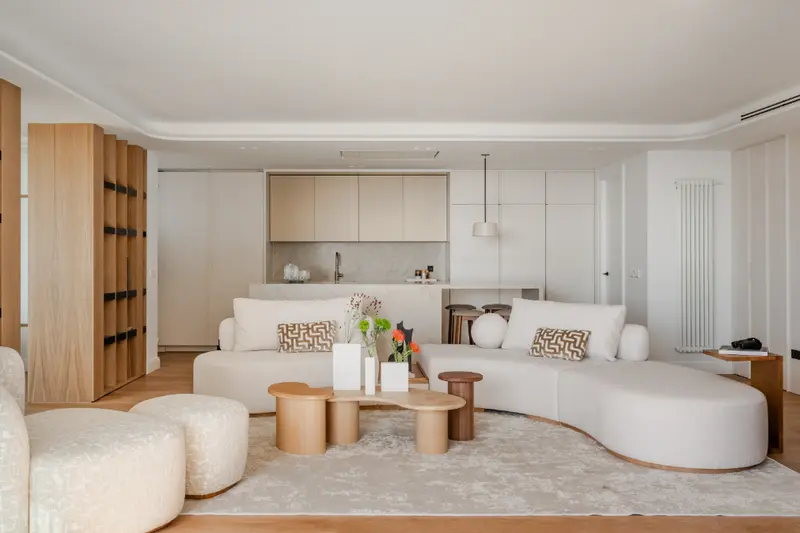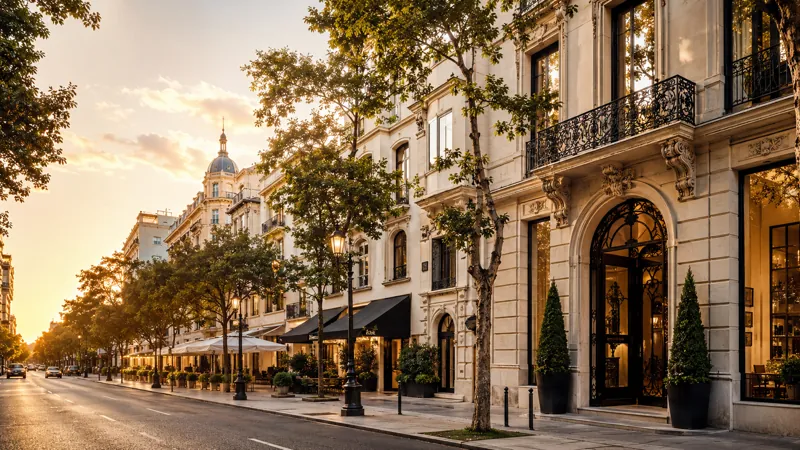
When we visit a building for the first time, we do not look at what everyone else sees — the flat, its condition, its layout. We look at the building: it is the building that decides whether the project is worth doing. This is the logic of our trade, and of the entire Madrid market.
A city built a century ago
The data outlines the opportunity: around 69% of Madrid's buildings predate 1980, and across Spain nearly half the housing stock is over 46 years old, according to the INE census. In the prime neighbourhoods the share is even higher — and that is precisely their value. With land exhausted inside the M-30, CBRE counts more than 20 conversions of historic buildings into luxury residential in 2024-2025 alone: restoration is not the alternative to new builds; in prime Madrid, it is the only route.
How to read a building
Our first filter has five layers. The structure: timber, iron or concrete floor slabs, and their real condition — the item that can sink a project. The heights: below 2.80 m ceilings, the grand format loses its point. The light: orientation, street width, courtyards — the only thing no renovation can manufacture. The entrance hall and staircase: a home's first impression starts on the street. And the community: a building with its inspections up to date and neighbours who invest in it is worth more than its neglected twin.
What "full" really means
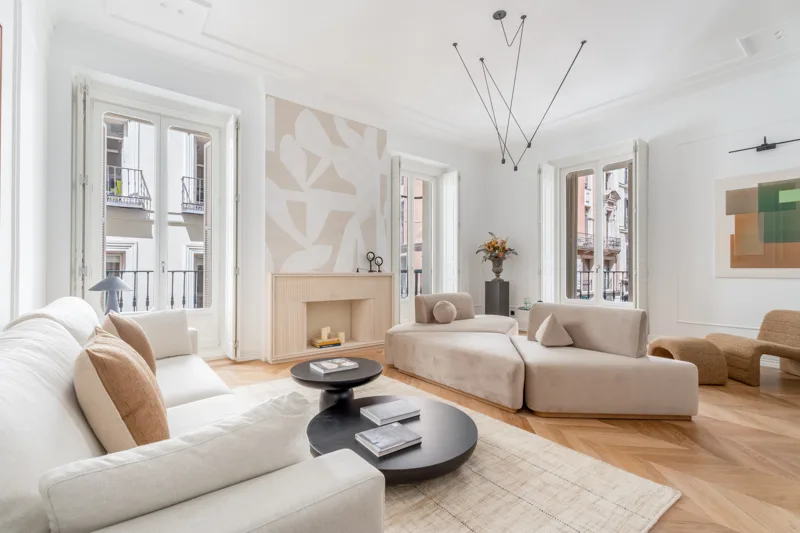
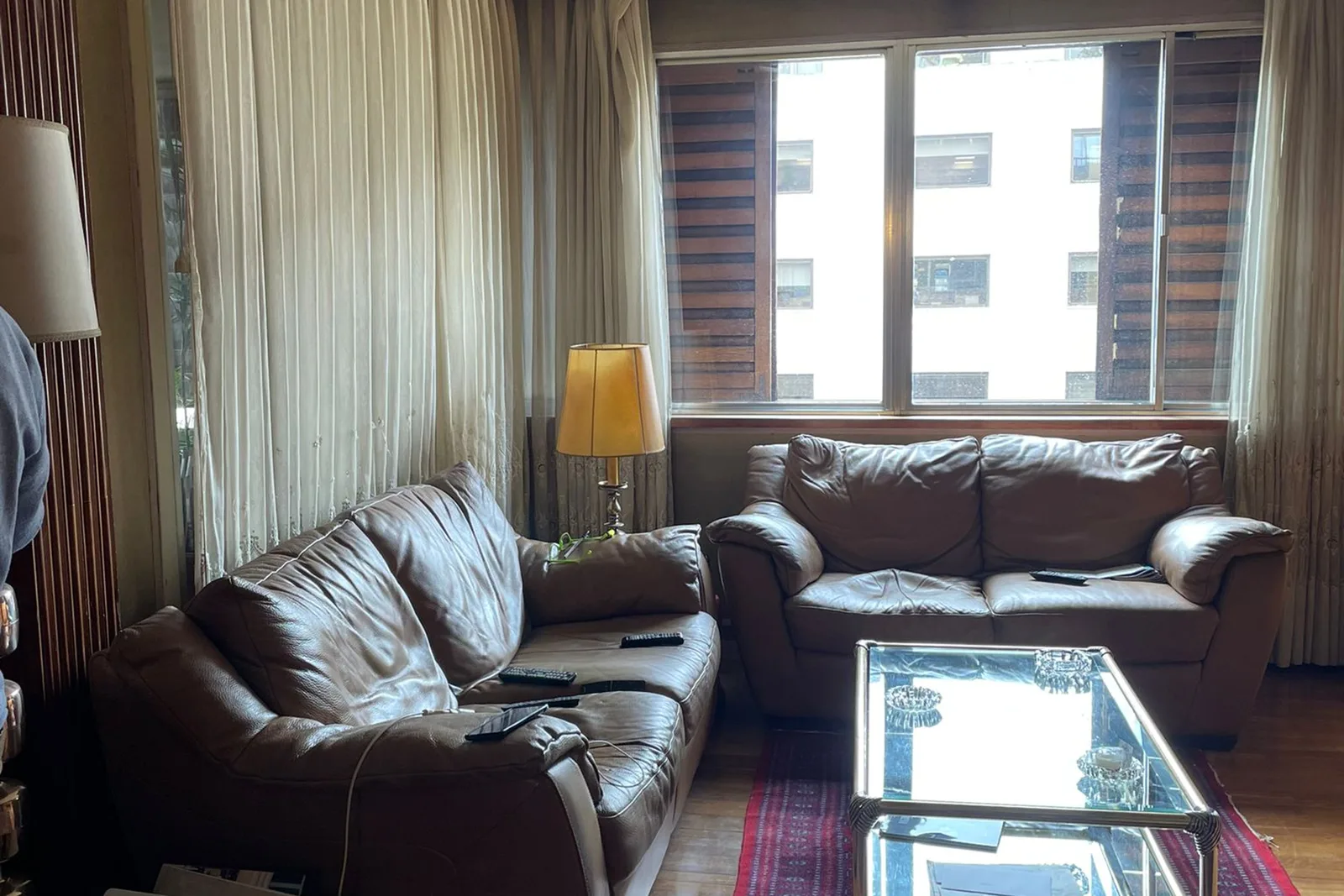
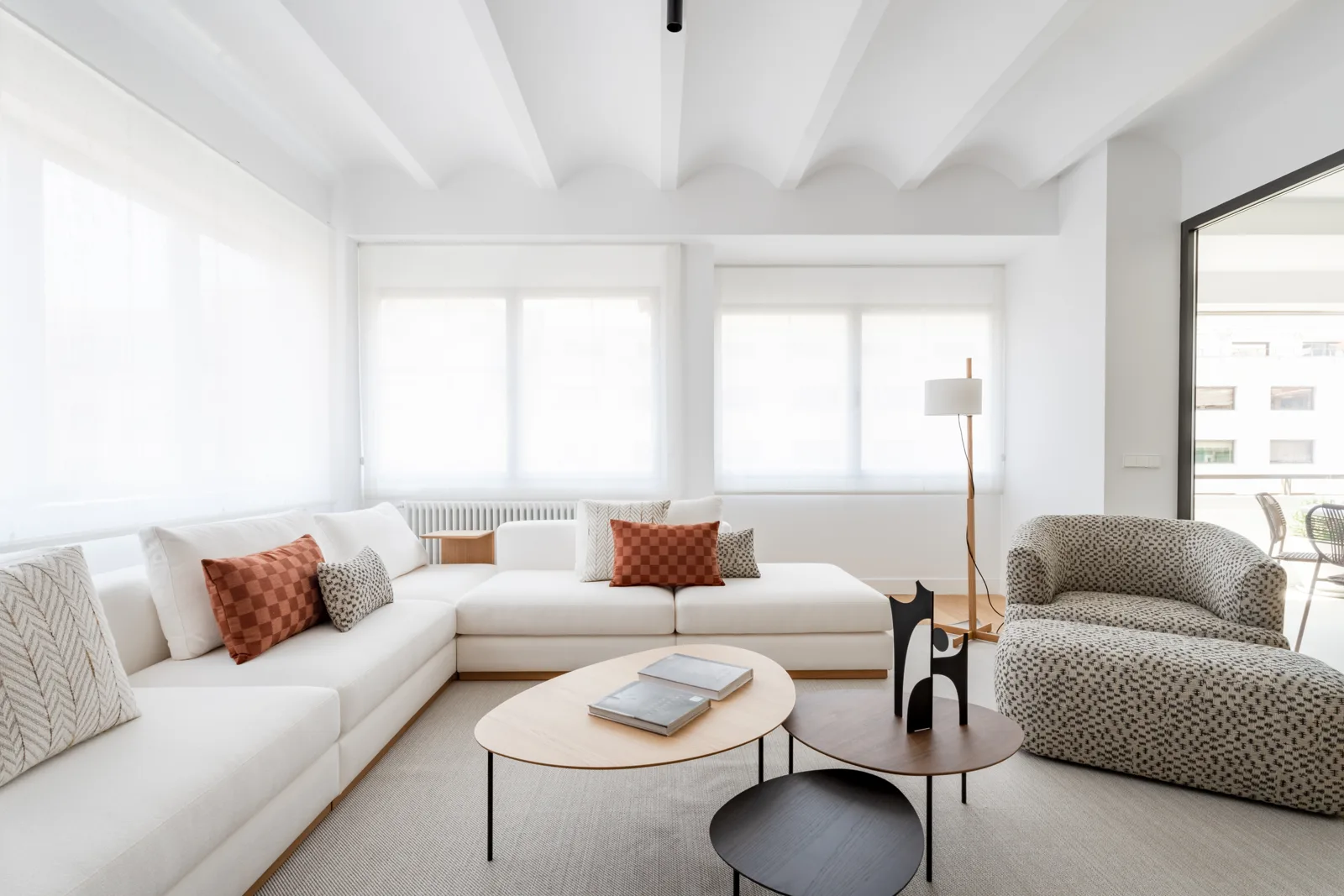
A Lumier restoration renews 100% of the invisible — drainage, plumbing, electrics, ducted climate control, acoustic and thermal insulation, exterior joinery — and restores the visible that deserves to stay: cornices, ceiling heights, window proportions, noble doors. The result is taxed as a resale (6% versus 10.75% for new builds) and matches them in comfort, beating them in the one thing that cannot be manufactured: character. The full process, told through a real case, is in the Diego de León transformation.
The buildings we choose and the finished results can be seen in our before and after — the best explanation of this trade is still showing it.